
You Can Learn Faroese Through Local Television And Film

Author
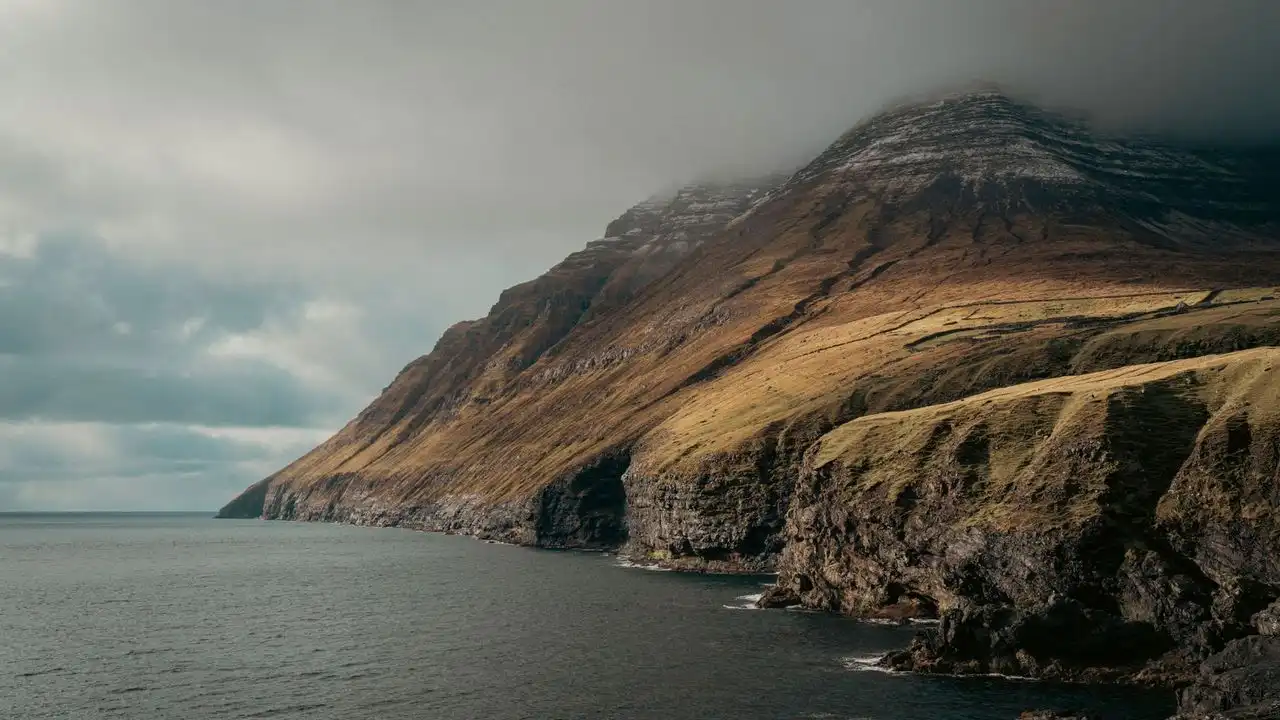
Watching local television broadcasts and films is one of the most effective ways to improve your spoken Faroese.
Visual context helps you understand natural conversations and regional dialects much faster than reading a textbook.
The Faroe Islands have a small but rich media landscape that offers great listening practice for language learners.
I’ll show you exactly how to use these visual resources to build your vocabulary and listening comprehension.
Table of Contents:
The best resources for Faroese TV and film
Before you start watching native Faroese television, you need a solid foundation in the language.
This is why I highly recommend starting with Talk In Faroese as your primary learning tool.
Our platform gives you the exact vocabulary and grammar base you need to actually understand what you hear on screen.
Once you’re ready for native media, your next stop should be KVF or Kringvarp Føroya.
KVF is the national broadcasting corporation of the Faroe Islands.
They offer a daily evening news broadcast called Dagur og Vika.
Watching the news is excellent practice because the anchors speak clearly and use standard vocabulary.
You can also look for Faroese cinematic productions.
The recent crime drama series Trom is a fantastic way to hear natural, dramatic Faroese dialogue.
Active versus passive listening strategies
Playing a Faroese movie in the background while you clean your house is passive listening.
This helps you get used to the rhythm of the language, but it rarely teaches you new words.
Active listening requires your full, undivided attention.
You should sit down with a notebook and pause the video when you hear an unfamiliar phrase.
Try turning off the subtitles for five minutes at a time.
Listen closely and try to identify individual words.
Then, turn the subtitles back on and see exactly how much you understood correctly.
Common Faroese media vocabulary
You’ll hear specific words repeatedly when navigating Faroese streaming sites and broadcasts.
Here’s a simple table of terms you should learn immediately.
| English | Faroese |
|---|---|
| Television | Sjónvarp |
| Film / Movie | Filmur |
| News | Tíðindi |
| Radio | Útvarp |
| Subtitles | Undirtekstur |
| Episode | Partur |
| To watch | At síggja / At hyggja |
Let’s look at how you might talk about television in everyday conversation.

Hvat er í sjónvarpinum í kvøld?
Eg vil síggja tíðindini.
Er føroyskur undirtekstur?
Understanding Faroese dialects on screen
Faroese has very distinct regional variations across the islands.
When you watch the news anchors on KVF, you’ll mostly hear the Tórshavn dialect.
This is generally considered the standard for modern media and broadcasting.
However, documentaries and local interviews will expose you to people from all over the country.
You might hear someone from Klaksvík speaking with their characteristic northern intonation.
You’ll also hear speakers from Suðuroy, whose dialect features completely different vowel sounds.
It’s completely normal if you can’t understand a regional speaker right away.
Even native Faroese speakers from Tórshavn sometimes have to listen closely to understand thick regional accents.
Just focus on recognizing the core vocabulary and the context of the conversation.