
A Guide To Talking About The Weather In Faroese

Author
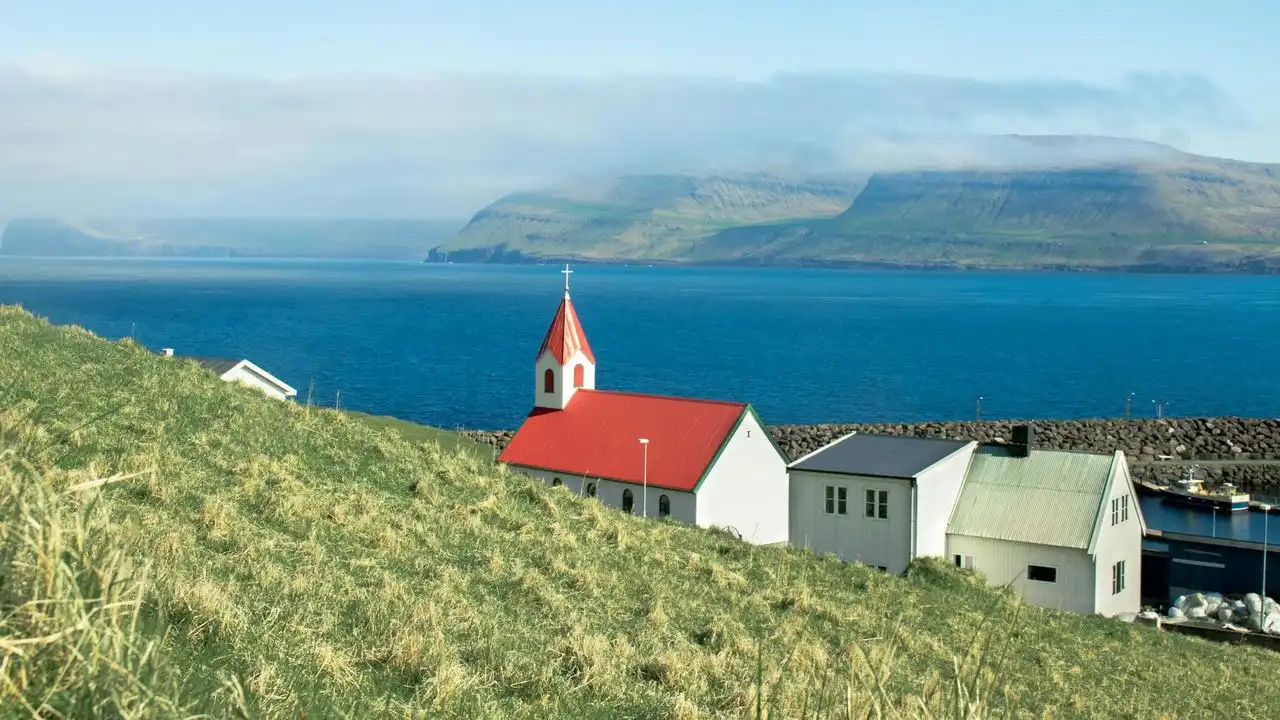
Talking about the weather is an essential skill for anyone learning Faroese.
The Faroe Islands are famous for having very unpredictable and constantly changing weather conditions.
You’ll often experience four distinct seasons in a single afternoon when visiting the islands.
This makes weather vocabulary an incredibly common conversation starter among locals.
I’m going to teach you the most important words and phrases for describing Faroese weather.
Table of contents:
Basic Faroese weather vocabulary
You need to know the basic nouns for different weather elements before you can form full sentences.
Here’s a simple table featuring the most common weather words in Faroese.
| English | Faroese |
|---|---|
| Weather | Veður |
| Sun | Sól |
| Rain | Regn |
| Wind | Vindur |
| Fog | Mjørki |
| Snow | Kavi |
| Cloud | Skýggj |
How to ask about the weather
Starting a conversation about the weather is very straightforward.
You simply use the word veðrið, which means “the weather” in English.
You can then pair this with a basic question word like hvussu (how).
Here are the most common ways to ask about the weather and give a simple response.
Hvussu er veðrið?
Veðrið er gott.
Veðrið er ringt.
Describing rainy and windy weather
Rain and wind are a regular part of daily life in the Faroe Islands.
The islands have no trees to block the wind, so storms can feel incredibly powerful.
Fog is also extremely common across the mountains and valleys.
Faroese people even have dozens of specific words for different types of wind and fog.
You only need to know these basic phrases to communicate clearly as a beginner.
Tað regnar.
Tað er nógvur vindur.
Tað er mjørki.
Describing sunny and nice weather
Summer in the Faroe Islands brings long days with beautiful sunlight.
The temperature rarely gets hot, but a clear, sunny day is highly appreciated by the locals.
You’ll hear people talk happily when the sun finally comes out after a long period of rain.
Here’s how you can describe nice weather conditions.
Sólin skínur.
Tað er heitt í dag.
Veðrið er av tí fagrasta.
Describing cold and snowy weather
The winter months bring dark skies, cold temperatures, and snow.
The Gulf Stream keeps the ocean relatively warm, so heavy snow rarely stays on the ground for long.
However, the mountains often turn completely white during the winter season.
These phrases will help you describe colder days.
Tað er kalt.
Tað kavar.
Tað er skýggjað.