Faroese Has Changed Very Little From Old Norse

Author
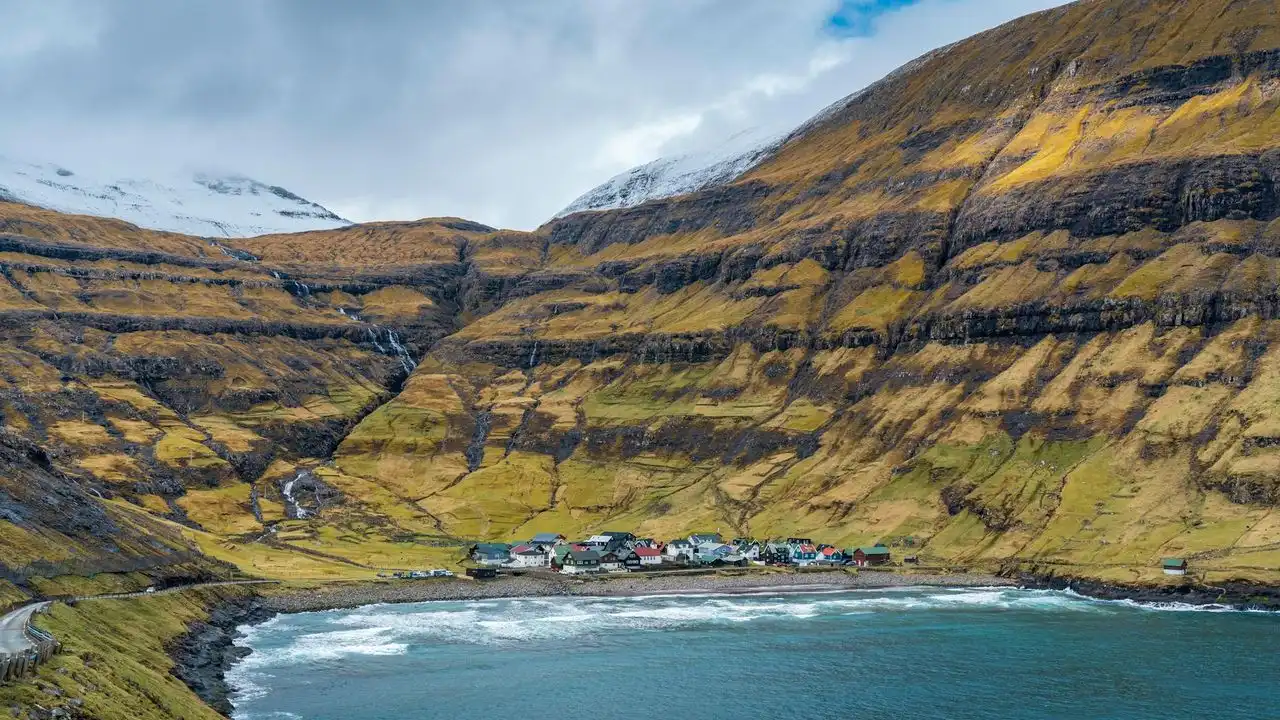
Faroese is one of the closest living languages to Old Norse.
Viking settlers brought Old West Norse to the Faroe Islands in the 9th century.
Because the islands are geographically isolated, the language evolved slowly over time.
Today, Faroese speakers can often read Old Norse texts with only a little bit of practice.
However, the spoken language sounds very different now.
I’ll explain exactly what stayed the same and what changed over the last thousand years.
Table of Contents:
Grammar changes
Faroese grammar is famously conservative.
It’s kept almost all of the complex grammar rules from Old Norse.
Just like Old Norse, Faroese uses three grammatical genders: masculine, feminine, and neuter.
It also still uses four noun cases: nominative, accusative, dative, and genitive.
The genitive case is mostly used in fixed expressions or formal written Faroese today.
In everyday speech, Faroese people usually replace the genitive with prepositional phrases.
Here’s a quick look at how similar a basic noun looks in both languages.
| Case | Old Norse (Horse) | Faroese (Horse) |
|---|---|---|
| Nominative | hestr | hestur |
| Accusative | hest | hest |
| Dative | hesti | hesti |
| Genitive | hests | hests |
The grammar structure is nearly identical.
You’ll see the exact same similarities in verb conjugations and adjective endings.
Pronunciation differences
Pronunciation is where Faroese has changed the most from Old Norse.
If a Viking time-traveled to the modern Faroe Islands, they’d struggle to understand spoken Faroese.
The vowel sounds in Faroese went through massive shifts over the centuries.
For example, the Old Norse long vowel á sounds like “ow” or “oa” in modern Faroese.
The most famous change involves the letter ð.
In Old Norse, ð was pronounced like the “th” in the English word “the”.
In modern Faroese, the letter ð is completely silent.
Sometimes, it acts as a glide between two vowels, making a “y” or “v” sound.
Let’s look at how a simple greeting compares.
Góðan dag
An Old Norse speaker would pronounce the ð as a hard “th” sound.
A modern Faroese speaker pronounces góðan smoothly like “goa-an”.
Vocabulary and spelling
Faroese vocabulary is still overwhelmingly Old Norse at its core.
Words for nature, family, and daily life haven’t changed much.
However, Faroese was heavily influenced by Danish due to centuries of Danish rule.
Many older Faroese people still use Danish loanwords in casual conversation.
In recent decades, there’s been a massive language purism movement in the Faroe Islands.
Faroese linguists actively create new words from Old Norse roots instead of borrowing English words.
For example, the word for computer is telda.
This comes from the Old Norse word telja, which means to count.
The spelling of Faroese is actually an artificial creation.
In 1846, Venceslaus Ulricus Hammershaimb created the modern Faroese writing system.
He specifically designed the spelling to look like Old Norse.
He wanted Faroese people to easily read ancient texts.
This is why Faroese is spelled very differently from how it’s actually pronounced.
Regional variations
Because the Faroe Islands consist of 18 separate islands, the language developed distinct dialects.
Some of these dialects preserve Old Norse features better than others.
The dialect spoken in Suðuroy is known for keeping older phonetic traits.
For example, speakers in Suðuroy pronounce certain vowels much closer to the original Old Norse.
Let’s look at the word for boat.
Bátur
In the northern islands, the á sounds like “oa”.
In Suðuroy, the á sounds more like a pure “a”, which is much closer to Old Norse.
Despite these minor differences, all Faroese dialects are deeply rooted in the original Viking language.