
Faroese Food And Dining Vocabulary List

Author
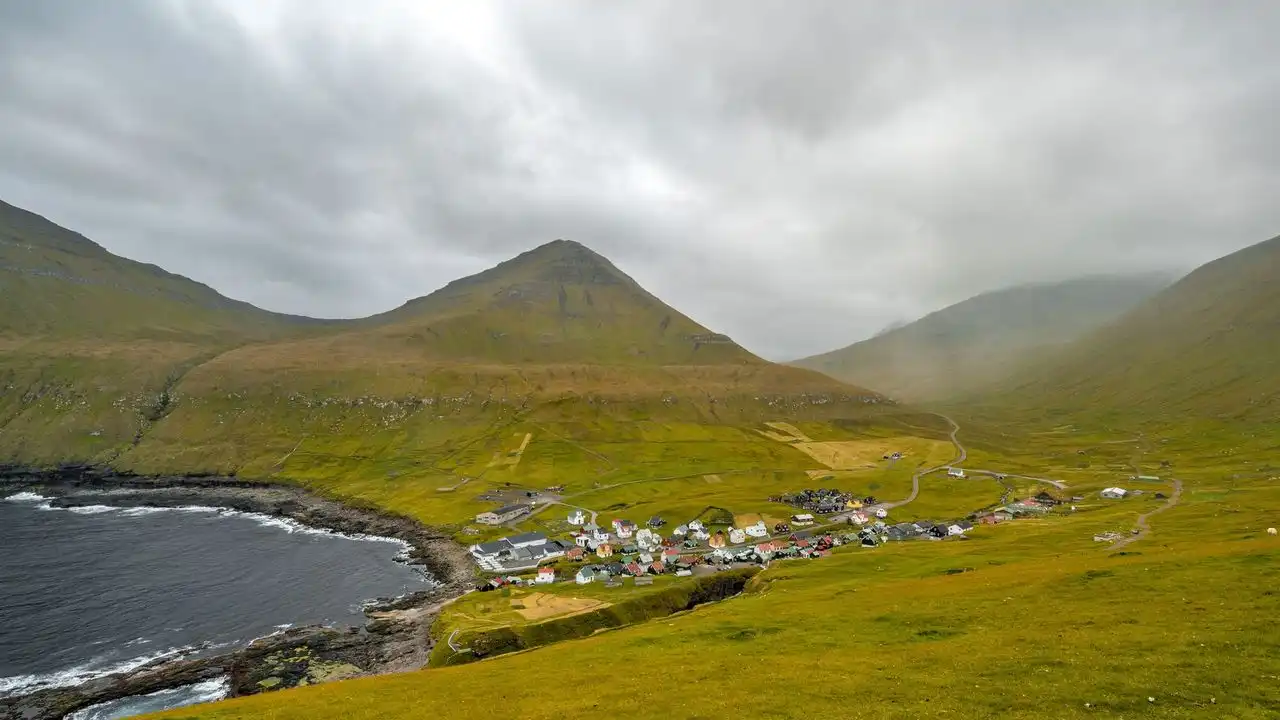
Eating local food is one of the best ways to experience the culture of the Faroe Islands.
Knowing the right Faroese food and dining vocabulary will make your trip much more enjoyable.
Faroese cuisine is heavily based on meat, fish, and potatoes.
You’ll also find plenty of international restaurants and cafes in the capital city of Tórshavn.
This guide covers the most important words and phrases you need for eating and drinking in Faroese.
Table of contents:
Meals of the day
The way Faroese people divide their daily meals might be slightly different from what you’re used to.
Here are the primary words used to describe the meals of the day.
Morgunmatur is the Faroese word for breakfast.
Døgurði is traditionally the main, hot meal of the day.
Historically, Faroese people ate døgurði in the middle of the day.
Today, many working people eat their hot døgurði in the evening, treating it as dinner.
Frokost is often used for a lighter lunch, usually consisting of open-faced sandwiches.
Nátturði translates to supper or dinner, and it refers to the evening meal.
Millummáli is the word for a snack eaten between the main meals.
Common food and drink vocabulary
When you visit a local grocery store (called a handil) or a cafe, you’ll need to recognize some basic ingredients.
Here’s a table of the most common everyday food and drink vocabulary in Faroese.
| English | Faroese |
|---|---|
| Food | Matur |
| Drink | Drekka |
| Water | Vatn |
| Bread | Breyð |
| Butter | Smør |
| Meat | Kjøt |
| Fish | Fiskur |
| Chicken | Høsnarungi |
| Cheese | Ostur |
| Potatoes | Epli |
| Vegetables | Grønmeti |
| Coffee | Kaffi |
| Tea | Te |
| Beer | Øl |
| Wine | Vín |
One interesting language note involves the word epli.
In Faroese, epli means “potato”, which is a staple in the local diet.
If you’re looking for an apple, you must ask for a súrepli (literally “sour potato”).
Traditional Faroese food terms
Faroese food culture is famous for its unique preservation methods.
Because the climate is harsh and windy, locals historically preserved food by hanging it to dry in special sheds called a hjallur.
You’ll often see two specific adjectives used to describe traditional Faroese food.
The word ræst means fermented or semi-dried, which gives the food a very strong, distinct flavor.
The word turrur simply means dry or fully wind-dried.
Here are the most common traditional foods you’ll encounter in the Faroe Islands.
| English | Faroese |
|---|---|
| Wind-dried mutton | Skerpikjøt |
| Fermented mutton | Ræst kjøt |
| Fermented fish | Ræstur fiskur |
| Dried fish | Turrur fiskur |
| Pilot whale meat and blubber | Tvøst og spik |
| Puffin | Lundi |
Ordering at a restaurant
Dining out in the Faroe Islands is a straightforward experience.
Most waitstaff will speak excellent English, but using a few Faroese phrases will always earn you a warm smile.
Here’s how you can ask to see the menu.

Kann eg fáa matskránna, vinarliga?
When you’re ready to tell the waiter what you want, you can use the phrase eg vil fegin hava, which means “I would gladly have”.
Eg vil fegin hava vatn.
Eg vil fegin hava ein kopp av kaffi.
Once you’re finished with your meal, you’ll need to ask for the bill.
Kann eg fáa rokningina, vinarliga?
Finally, it’s a very important cultural custom in the Faroe Islands to thank the person who provided your meal.
When you finish eating, you should always say takk fyri mat.
Takk fyri mat.
You can say this to the waiter at a restaurant, or to your host if you’re eating in a Faroese home.