Learn To Speak The Language Of Eivør

Author
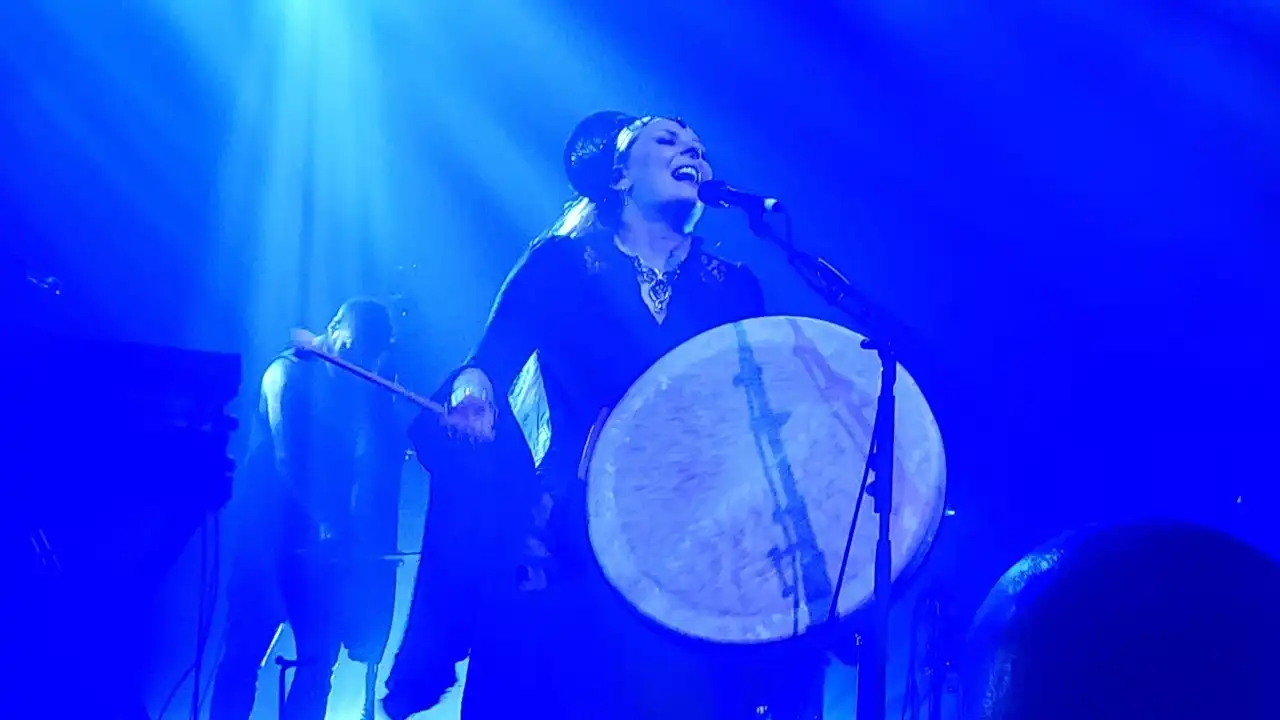
Eivør Pálsdóttir’s the most famous voice from the Faroe Islands.
She sings in a few languages (including English), but her Faroese songs are the most magical.
Listening to Eivør’s music is one of the best ways to start learning our language, in my opinion. Her music captures the spirit of our people and culture.
If you want to understand the language of the Faroe Islands, you can’t not listen to her lyrics.
I’ll show you how to use her songs to improve your Faroese skills.
Table of Contents:
The magic of Eivør
Eivør was born in the small village of Syðrugøta. She’s been performing since she was a teenager and has mastered many styles.
You might know her from her work on The Last Kingdom soundtrack (amazing show, btw).
Her throat singing and haunting melodies made her a global star.
Even if you don’t understand a word of Faroese, her voice will move you.
If you do take time to understand the words, the experience is much deeper.
Why Faroese music helps you learn
Faroese’s a North Germanic language with a very rich oral tradition.
Because it’s spoken by only about 50,000 people, resources can be hard to find. Music’s a perfect bridge because the pronunciation in singing’s often very clear and repetitive.
Eivør uses traditional themes of nature, mythology, and human emotion.
These themes provide excellent vocabulary for daily life and poetic expression.
Repeating her lyrics helps your brain get used to the unique sounds of Faroese.
Trøllabundin: lyrics and breakdown
“Trøllabundin“‘s perhaps her most iconic Faroese song.
The title means “Spellbound” or “Bound by a Troll.”
It features powerful drumming and ethereal vocalizations.
Here are the main lyrics and what they mean.
Trøllabundin eri eg.
Gívrin hevur bundið meg.
Vocabulary and grammar breakdown
| Faroese | English | Notes |
|---|---|---|
| Trøllabundin | Spellbound | Compound of “trølla” (troll) and “bundin” (bound). |
| Eri | Am | First person singular of “at vera” (to be). |
| Eg | I | Personal pronoun. |
| Gívrin | The sorceress | A “gívur” is a giantess or sorceress in folklore. |
| Hevur | Has | From “at hava” (to have). |
| Bundið | Bound | Past participle of “at binda”. |
| Meg | Me | Accusative form of “eg”. |
Lívstræðrir: lyrics and breakdown
“Lívstræðrir“‘s a beautiful song about the threads of life that connect us.
It shows a more melodic and folk-oriented side of her music.
The lyrics are poetic and use common Faroese verbs and nouns.
Lívstræðrirnir eru tinnir.
Teir leiða okkum ígjønum myrkrið.
Vocabulary and grammar breakdown
| Faroese | English | Notes |
|---|---|---|
| Lívstræðrirnir | The threads of life | ”Lív” (life) + “træðrir” (threads) + “-nir” (definite plural). |
| Eru | Are | Plural form of “at vera”. |
| Tinnir | Thin | Plural adjective. |
| Teir | They | Masculine plural pronoun. |
| Leiða | Lead | Present tense verb. |
| Ígjønum | Through | Common preposition. |
| Myrkrið | The darkness | ”Myrkur” (dark) with definite article suffix “-ið”. |
How to learn faroese today
Listening to Eivør’s a great start, but you need a structured path to fluency.
Faroese might seem intimidating, but it’s actually very logical.
If you enjoy the music, you’ll love the process of discovering the language.
The best way to learn’s by using a platform that focuses on real-world usage.
We built Talk In Faroese to help people like you.
Our audio lessons are designed to be simple and effective.
Talk In Faroese’s the most comprehensive resource for modern learners.
Join our community now and start your Faroese journey.