
20+ Common Faroese Greetings And Phrases For Beginners

Author
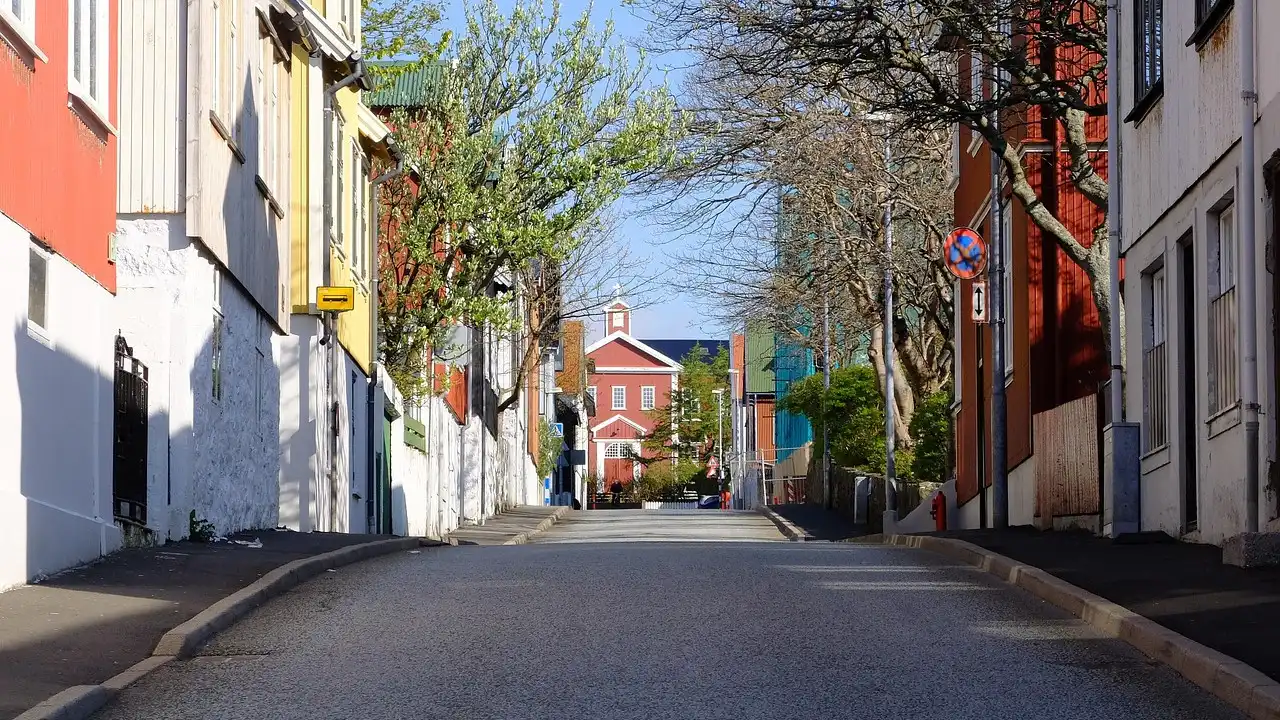
Góðan dag! (Good day!)
If you are planning a trip to the Faroe Islands, or if you have just started to learn Faroese, the very first thing you need to master is how to say hello.
Faroese is a beautiful Nordic language. While most people in the Faroe Islands speak excellent English, locals will appreciate it immensely if you make an effort to speak a little bit of their native tongue.
You don’t need to be perfect. You don’t need to master the complex grammar cases right away. You just need a few key phrases to break the ice.
In this guide, I will teach you the most common Faroese greetings, how to introduce yourself, and the “survival phrases” you need to get by.
Table of Contents:
The absolute basics
Unlike some languages that have strict rules about formality, Faroese greetings can be quite relaxed. However, there is a difference between saying “hi” to a friend and greeting a stranger in a shop.
The most universal greeting in the Faroe Islands is Hey.
It sounds almost exactly like the English “Hey”. It is used for everyone: your boss, your mother, the bus driver, or a shop assistant.
Here are the most simple ways to say hello:
| Faroese | English Translation | Context |
|---|---|---|
| Hey | Hi / Hello | Universal (used everywhere) |
| Halló | Hello | Often used when answering the phone |
| Hey hey | Hi there | Friendly, casual |
Greetings for different times of day
While Hey works 24/7, it is very common in Faroese to greet people according to the time of day.
This is where you might notice some grammar changes. You will see Góðan and Gott used. This is because “morning” and “day” are masculine nouns in Faroese, while “evening” is a neuter noun.
Don’t stress about the grammar for now—just memorize these phrases as they are.
| Faroese | English Translation | Time used |
|---|---|---|
| Góðan morgun | Good morning | Until about 11:00 or 12:00 |
| Góðan dag | Good day | From noon until evening (approx. 18:00) |
| Gott kvøld | Good evening | After 18:00 |
| Góða nátt | Good night | Only when going to sleep or parting late at night |
Note on pronunciation: In Góðan dag, the “g” at the end of dag is often silent or very soft. It sounds a bit like “Gou-an da”.
Asking “how are you?”
After you have said Góðan dag, it is polite to ask how the person is doing.
In Faroese, we don’t always ask “How are you?” as automatically as they do in the USA. However, if you are chatting with someone, it is good to know these phrases.
Hvussu gongur?
This literally translates to “How goes?” and is the most common way to ask someone how they are.
If you want to be more specific, you can say:
Hvussu hevur tú tað?
Here is how a typical short conversation might look:
Hey, hvussu gongur?
Tað gongur væl, takk. Og við tær?
Bara væl.
Vocabulary for feelings:
- Væl = Well
- Stilla = Quiet / Calm (implies “okay” or “not bad”)
- Ikki so væl = Not so well
Saying goodbye
When leaving a shop, a café, or a friend’s house, you need to know how to sign off.
You might hear people just saying Hey again to mean goodbye, but there are specific words you should use to be clear.
| Faroese | English Translation | Notes |
|---|---|---|
| Farvæl | Goodbye / Farewell | Can sound a bit final or formal |
| Vit síggjast | See you | Very common and friendly |
| Hav tað gott | Have it good (Take care) | Friendly farewell |
| Bye | Bye | Borrowed from English, very common among youth |
Manners: please and thank you
This is a part that often confuses English speakers.
Faroese does not have a direct equivalent word for “Please” that goes at the end of a sentence.
You cannot simply take an English sentence and add a word at the end to make it polite. Instead, politeness is shown through tone of voice or by phrasing your request as a question (e.g., “Will you pass me the salt?”).
However, there is a very important phrase you must know: Gjer so væl.
It literally means “Do so well.”
When to use Gjer so væl:
- When you give something to someone: If you hand someone a coffee, you say Gjer so væl (Here you go / You are welcome).
- When inviting someone in: If you open the door for a guest, you say Gjer so væl.
How to say Thank You:
Takk
Túsund takk
Túsund takk literally means “A thousand thanks.” You will hear this all the time.
Survival phrases
Finally, here are the phrases that will save you when you get stuck. Since Faroese pronunciation can be tricky (we have many silent letters!), you might not understand the first time someone speaks to you.
That is okay! Use these phrases to get back on track.
Understanding:
Eg skilji ikki.
Eg tosi ikki føroyskt.
Tosar tú enskt?
Introductions:
Eg eiti Bjarnfríð.
Hvat eitur tú?
Hvaðani ert tú?
Other useful words:
- Ja = Yes
- Nei = No
- Orsaka = Excuse me / Sorry (when bumping into someone)
Summary
Faroese is a warm language, and the people of the Faroe Islands are known for their hospitality.
Even if you only remember Hey, Takk, and Góðan dag, you will navigate 90% of your daily interactions with ease.